I have a young man in my class this year who might just be the hardest-working man in the 7th grade. He is, for lack of better words, just an incredible kid. He pays attention in class, behaves at all times, and respects his classmates. He is generous to a fault, helpful, and kind. He is not especially popular amongst other kids, but rarely do I see any of them turn him away. He knows and addresses each teacher -- whether you have him or not -- by name. He is the purest of spirits and the biggest of hearts.
And I'm worried.
See, this kid struggles academically. He works hard to focus in class, and he constantly worries about his grades. When he gets a poor grade, he immediately comes to tutoring to fix it. He will sit and work for hours at a time. He reviews his notes. He studies my anchor charts. He can spit out words like "appositive phrase" and "subordinating conjunction" and "dependent clause" with the best of them. He can define them. Mostly, he can recognize them. And he can sometimes create with them, but only in isolation.
See, this kid's brain doesn't work like others. It's like a jigsaw puzzle. He has the pieces. He knows what to do with them. He's constantly checking the picture on the box. But as he works, it's like someone dumped all the pieces from the other puzzles on the shelf into his box. And his brain isn't built to sort all of those pieces. It just isn't. So instead, he picks up a piece, he looks at it, and he knows two things:
A) It's a puzzle piece.
and
2) It's in the same box as the others.
Therefore, it must fit. So he looks at all of the holes in the puzzle, and he attempts to place it in there. Then, realizing that this piece fits none of the spaces, he finds another piece. Maybe a bright orange piece, but the puzzle is clearly an evening sky. And he picks them up, piece after piece, trying them even when it is not logical.
But it is logical to him because they're in the same box. And if they're in the same box, they must go together.
Tomorrow, he has to solve a hell of a puzzle. He's tried 3 times before, but it's as if each time he attempts a solution, it gets worse. Every morning, he greets me. Then he begins the worrying, the fixating, the doubting. See, the worst part is that he knows he can't solve it. And he knows what it means to fail in the attempt. His fear of failure is paralyzing and frantic all at once. He knows that before he even takes the lid off the box, he'll find pieces that don't make sense. Except that they're all in the same box, and if they're in the same box, they SHOULD fit.
For the last two weeks, I have sat with him in tutorials as he prepares for tomorrow. He reads and then looks at the answer choices. We talk through possibilities, but we keep finding odd pieces that have no home. He struggles for the pieces, nervous and searching my face for clues that he might be right. I struggle to hold back my tears, heartbroken and searching for the way to make things alright.
To make the impossible feel possible.
To find the boiling sun in a midnight sky.
Monday, March 28, 2016


Monday, March 21, 2016
The Weight
There is a 20 pound cat on my chest.
I lay on the couch, and this is where she curls up. On my chest.
It is nonsensical. She is a cat. I am a human. I should force her to go elsewhere. This is what it is to be in charge, to be the master. But if you've ever owned a cat, you must realize that you are never the master.
It's hard to breathe. Every movement, every breath, feels heavier and heavier. But there is a comfort to the weight. I have grown accustomed that as soon as I am still, she will find me.
It's a fine line between being trapped and being grounded. But her presence is more the latter than the former, like putting a big rock on the end of your kite string to keep it from floating away into the unknown.
It is hot and uncomfortable. I shift and squirm to try to find some relief without being the asshole that throws this lovable fat cat across the room. The tv show has ended, but I cannot reach the remote. So I lay in silence, listening to her rumbling purr, deep and endless, thinking all the thoughts I won't give time or energy to all day.
And just as I'm about to give up, to cast her aside, to push her away -- she turns her sweet face to mine, stops her purr, and sighs the deepest, most human, sigh she can. And I bury my face in her fur and sob. I cry hard for a few moments, sniveling and ugly. I let go of all the things -- all the hateful, jealous, frightful things I've locked up, deep inside me.
She doesn't meow or whine or run away. She just lets me sob, soaking her fur with my fury and fear, until it is exhausted. Then, she clambers down into the floor, taking all of her weight and my own, leaving me lighter.
And I can breathe once more.
I lay on the couch, and this is where she curls up. On my chest.
It is nonsensical. She is a cat. I am a human. I should force her to go elsewhere. This is what it is to be in charge, to be the master. But if you've ever owned a cat, you must realize that you are never the master.
It's hard to breathe. Every movement, every breath, feels heavier and heavier. But there is a comfort to the weight. I have grown accustomed that as soon as I am still, she will find me.
It's a fine line between being trapped and being grounded. But her presence is more the latter than the former, like putting a big rock on the end of your kite string to keep it from floating away into the unknown.
It is hot and uncomfortable. I shift and squirm to try to find some relief without being the asshole that throws this lovable fat cat across the room. The tv show has ended, but I cannot reach the remote. So I lay in silence, listening to her rumbling purr, deep and endless, thinking all the thoughts I won't give time or energy to all day.
And just as I'm about to give up, to cast her aside, to push her away -- she turns her sweet face to mine, stops her purr, and sighs the deepest, most human, sigh she can. And I bury my face in her fur and sob. I cry hard for a few moments, sniveling and ugly. I let go of all the things -- all the hateful, jealous, frightful things I've locked up, deep inside me.
She doesn't meow or whine or run away. She just lets me sob, soaking her fur with my fury and fear, until it is exhausted. Then, she clambers down into the floor, taking all of her weight and my own, leaving me lighter.
Monday, March 14, 2016
Eye on the Ball
If there were one defining phrase to describe my mother, it would be "eye on the ball". I've watched her hit screaming liners and home runs. I've seen her hit drives so pure and sweet they could sweeten all the iced tea of the South. She played basketball during the 6-on-6 days, playing only defense for entire games, always with one eye on the basketball and one on her man. She preached to me, all my life, the dangers of losing sight of either.
Keep the game in front of you. Keep your eye on the ball. These were not just lessons for sport. For my mom, they were rules to life. My mom is a survivalist. Survivors do not look back at the bear chasing them down; they put as much distance as possible between it and them.
Forever, I thought my mom hoarded secrets like my dad hoarded tools or knick-knacks. She never spoke about her childhood or family or life before all of us. Even as we grew, she never seemed wistful or sentimental. Never looking at old photo albums or reliving moments when we were small. Those qualities were purely Dean. Instead, Wanda was looking forward, waiting for the next turn, the next game, the next crisis. She was the mover, I thought, while my dad was the shaker.
As a child, I was eternally frustrated and confused by this particular quality of my mom. I was left constantly wondering and guessing about what she did not say and did not share. I felt I was always running behind, and my mother has never been one to look back. Privacy seemed to be her greatest weapon. She did not offer; I did not intrude. And this was our dance of life.
Even as my dad got sick, she kept their problems at bay as long as she could. As he worsened, even in the final months, she tried to stay focused and look ahead. I think that only as she saw the future dwindling, she began to look back. Since Christmas, my mother has changed. She talks more: about politics and world events, about fear, about her past. Each visit, I learn new things. Some she gives freely. Others require questions. But there are no more secrets.
Tonight, as we cooked dinner, she talked about her life before Dad. Before all of us. It was deep and wide, swimming with nostalgia and regret. I leaned on the kitchen sink, watching her as she stirred and spoke and then looking out the window when it felt too much. It was a beautiful and intimate reflection, and I suddenly was aware that it was less conversation and more confession. My mother doesn't have a storage shed full of knick-knacks and tools to give me. Instead she has left me this: herself.
And I began to wonder if I had been locked out all those years or just too afraid to turn the doorknob?
Monday, March 7, 2016
Mondays
My 7th period class came in today, and they were so unbelievably, alarmingly quiet. Sober, subdued, and silent. Although there are only 11 of them, they can turn my classroom upside down and inside-out just as fast as my largest class. But not today.
When I asked them if everything was okay, they just stared back at me -- their eyes glazed and defeated. Like zombies who had even lost interest in brains.
Finally, one of my boys said, "It's just so... so... Monday."
I couldn't help but smile. He was right. Even outside, the weather seemed to feel it too. Dark. Ominous. It looked like rain all day, but it couldn't quite gather the energy.
I was all up in my Monday-feels today, too, although it wasn't quite as bad as 7th period, I think. Mondays are for waking up late, forgetting to put on deodorant, wearing the wrong shoes, and hitting every red light.
If both copy machines at work are going to break down, it will surely happen on a Monday. If your bag of garbage is going to split and pour out onto the sidewalk, it will happen on a Monday as it did today. It's science. Or voodoo. Or both.
Mondays look like traffic jams and smell like burnt popcorn.

Mondays. Damn you. Mondays.
When I asked them if everything was okay, they just stared back at me -- their eyes glazed and defeated. Like zombies who had even lost interest in brains.
Finally, one of my boys said, "It's just so... so... Monday."
I couldn't help but smile. He was right. Even outside, the weather seemed to feel it too. Dark. Ominous. It looked like rain all day, but it couldn't quite gather the energy.
I was all up in my Monday-feels today, too, although it wasn't quite as bad as 7th period, I think. Mondays are for waking up late, forgetting to put on deodorant, wearing the wrong shoes, and hitting every red light.
If both copy machines at work are going to break down, it will surely happen on a Monday. If your bag of garbage is going to split and pour out onto the sidewalk, it will happen on a Monday as it did today. It's science. Or voodoo. Or both.
Mondays look like traffic jams and smell like burnt popcorn.
Mondays. Damn you. Mondays.
Monday, February 22, 2016
The Dodge
When I was 16, my mom bought me my first car. It was not the "big red bow across a shiny new BMW" moment that you see on commercials. Far from it. In fact, when I look back on it, that thing was barely a car. It was more like a tank.
My first car was a 1972 Dodge Coronet. It was 1992. I'll let you do the math.
My mom bought it from a family friend, Margaret Pettit, whose granddaughter, Larinda had driven it through high school. My mom paid $150 for the car, and she paid it out in hairdos. At $15 a pop for a shampoo and set, my dear mom paid off my Sweet Sixteen gift in just 10 weeks.
The Dodge was hunter green, in most places at least, and it was as big and solid as a rhinoceros. It had no grill, a back door that would not open, and quilts stapled to the front seat instead of upholstery. It was perpetually summer in that car as the heater was always on. In fact, the controls had somehow melted so that even if you wanted to turn the heat off (in warm weather) or up high (in the winter), you couldn't. Crank windows served as the only temperature control available.
It was scratched and dinged and rusted in spots. On the passenger side, the floorboard was so thin that it showed road as you drove along. Or it might allow in a little lake water if one were to accidentally drive it in partway off of the beach. Not that I'd know anything about that.
That car had lived, and it had the scars to prove it.
When my mom and dad gave me The Dodge, I tried to be happy. It should've been freedom from the school bus and less dependence on my parents. But all I saw were those scars. I drove it some, back and forth to school mainly, but I did not hide my embarrassment and disappointment well. Feeling guilty, there were more mornings than not, where my mom would drive the Dodge to work while I drove her car to school. Looking back, it was probably the most snot-nosed, spoiled brat move I ever made. Yet what good is being sixteen if you can't be a brat about it?
It wasn't until a couple of the boys at school drove it and realized how fast it would go and how unbreakable it felt that I began to see past its shell. That I could appreciate it as more than a car but as a legacy. I drove it for another year or so -- until I got a different Dodge at 17 -- through fields, down country dirt roads, and, perhaps, into a lake for just a few moments. There was nothing you could do to that car that it could not take.
I don't truly know what number owner I was for the Dodge. I knew that Larinda had driven the Hell out of it, but I can't be sure of the owner(s) in the 7 or 8 years between us. I can remember her cruising past us at the City Pool or making the drag. The engine was loud and the radio louder. But always, loudest of all, was Larinda. She had a laugh as big as Texas and a hug so tight that it would make your eyes pop out. She was strong and powerful with a spirit that could bring a storm as quickly as it brought sunshine.
Last week, I heard the news that Larinda had passed away. Not even 50 years old. Although I had not seen her in almost 20 years, there was a moment I could still hear her laugh. I thought instantly of that old Dodge, by far our biggest connection. And I smiled as I remembered it.
My dad kept that big ol' Dodge for several years after I went off to college. I was on my 3rd or even 4th car by the time he sold it to someone else. But he confessed that there were often times when his truck or my mom's car would not start, and one of them would go grab the keys to Mean Green and give it a roll. He said it was the only car we'd owned that never once failed him.
I hadn't appreciated that car for what it was worth. I did not, or could not, see its value to my life. I knew not of its history, or its troubles. I saw only its scratches, its scars, its dings. I never stopped to marvel at all it had endured to survive. I worried more about the outside than I cared for what was inside -- that which was steady, strong, and unfailing. I could not like it until others gave me permission -- encouragement, even -- to love it.
And I have wondered often in the past few days how like that car is to me. Or to Larinda. Or to all of the other people moving in and out of our lives. How do we view our own scratches and dings -- with shame or with pride at our survival? Do we give up when the upholstery rips and tears, or do we find a way to mend? Are we built for the showroom or the open road?
Wherever you are, Larinda, I hope you're singing along with those windows down. Thanks for the ride.
My first car was a 1972 Dodge Coronet. It was 1992. I'll let you do the math.
My mom bought it from a family friend, Margaret Pettit, whose granddaughter, Larinda had driven it through high school. My mom paid $150 for the car, and she paid it out in hairdos. At $15 a pop for a shampoo and set, my dear mom paid off my Sweet Sixteen gift in just 10 weeks.
The Dodge was hunter green, in most places at least, and it was as big and solid as a rhinoceros. It had no grill, a back door that would not open, and quilts stapled to the front seat instead of upholstery. It was perpetually summer in that car as the heater was always on. In fact, the controls had somehow melted so that even if you wanted to turn the heat off (in warm weather) or up high (in the winter), you couldn't. Crank windows served as the only temperature control available.
It was scratched and dinged and rusted in spots. On the passenger side, the floorboard was so thin that it showed road as you drove along. Or it might allow in a little lake water if one were to accidentally drive it in partway off of the beach. Not that I'd know anything about that.
That car had lived, and it had the scars to prove it.
When my mom and dad gave me The Dodge, I tried to be happy. It should've been freedom from the school bus and less dependence on my parents. But all I saw were those scars. I drove it some, back and forth to school mainly, but I did not hide my embarrassment and disappointment well. Feeling guilty, there were more mornings than not, where my mom would drive the Dodge to work while I drove her car to school. Looking back, it was probably the most snot-nosed, spoiled brat move I ever made. Yet what good is being sixteen if you can't be a brat about it?
It wasn't until a couple of the boys at school drove it and realized how fast it would go and how unbreakable it felt that I began to see past its shell. That I could appreciate it as more than a car but as a legacy. I drove it for another year or so -- until I got a different Dodge at 17 -- through fields, down country dirt roads, and, perhaps, into a lake for just a few moments. There was nothing you could do to that car that it could not take.
I don't truly know what number owner I was for the Dodge. I knew that Larinda had driven the Hell out of it, but I can't be sure of the owner(s) in the 7 or 8 years between us. I can remember her cruising past us at the City Pool or making the drag. The engine was loud and the radio louder. But always, loudest of all, was Larinda. She had a laugh as big as Texas and a hug so tight that it would make your eyes pop out. She was strong and powerful with a spirit that could bring a storm as quickly as it brought sunshine.
Last week, I heard the news that Larinda had passed away. Not even 50 years old. Although I had not seen her in almost 20 years, there was a moment I could still hear her laugh. I thought instantly of that old Dodge, by far our biggest connection. And I smiled as I remembered it.
My dad kept that big ol' Dodge for several years after I went off to college. I was on my 3rd or even 4th car by the time he sold it to someone else. But he confessed that there were often times when his truck or my mom's car would not start, and one of them would go grab the keys to Mean Green and give it a roll. He said it was the only car we'd owned that never once failed him.
I hadn't appreciated that car for what it was worth. I did not, or could not, see its value to my life. I knew not of its history, or its troubles. I saw only its scratches, its scars, its dings. I never stopped to marvel at all it had endured to survive. I worried more about the outside than I cared for what was inside -- that which was steady, strong, and unfailing. I could not like it until others gave me permission -- encouragement, even -- to love it.
And I have wondered often in the past few days how like that car is to me. Or to Larinda. Or to all of the other people moving in and out of our lives. How do we view our own scratches and dings -- with shame or with pride at our survival? Do we give up when the upholstery rips and tears, or do we find a way to mend? Are we built for the showroom or the open road?
Wherever you are, Larinda, I hope you're singing along with those windows down. Thanks for the ride.
Monday, February 15, 2016
Sea Glass
I was 35 years old the first time I laid eyes upon the ocean.
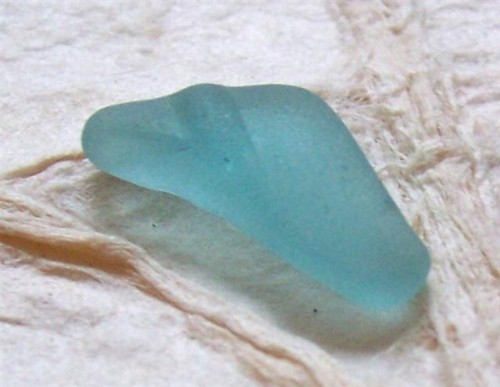
I understood, in theory, what I was looking at, I suppose. I mean, I've studied the oceans in geography class, done reports on sea life in elementary school, learned about tides and lunar pull and shipwrecks. Upon seeing it, however, I could not grasp its enormity. Even just standing on the edge of that gulf, looking to the horizon, knowing full well the distance to another shore, I could not imagine such a vastness. I felt small and lonesome and shaken.
Lying on the beach was a small piece of glass. I picked it up as I looked for a shell, a rock, a memory. It was plain and brown, probably just a piece of a broken beer bottle. Nothing special. A remnant from another person's history. Time and tides had dulled its edges some, but it sliced my thumb as I wiped away the sand. Not dulled enough to be safe to handle, I dropped it, and stuck my hand to my mouth on instinct. I left that beach with the taste of pain, coppery and salty, on my tongue.
I love the water. I always have. To swim, to splash, to float. My mother has always been terrified of it; always forcing me into life jackets, looking away as I plunged in. It was one of the few things I was unafraid of. I felt confident and weightless in the water. I could tread longer than anyone else in my swim class. I floated instantly, releasing all my worry into the sky and sun above me. But I had grown up on lakes and pools and creeks. Always, I could see the edge. Always, I knew there was an end. It was only as I stood in the waves, holding the tiny hand of a child, staring out into the ocean, did I first feel the unease. The sense of danger from a riptide and the unknown. It felt too big, too much, too powerful. I calmed myself by digging my toes into the sand underneath. Relief comes from connection, from standing on solid ground.
But there is a certain irresistible beauty in panic, and I waded deeper still.
For the past decade, there have been what I call the "small deaths" -- the "first times". When he stumbled. When he stopped driving. When he moved to a wheelchair. When he could no longer talk on the phone. The delusions. The hallucinations. The anger. When he could not brush his own teeth or shuffle cards or finish a game of dominos. When he could not recognize me. When I could not recognize him. Each moment a wave. Some were ripples, barely noticeable. Others, a tsunami. With each, I panicked more. With each, I kept wading deeper, marking each buoy as I passed, knowing, logically, there was an end I could not see just over the horizon.
I fooled myself into thinking that my father's death would bring me back to dry land. It has not. My grief feels like the ocean, big and powerful and unfathomable. I cannot see the shore although, logically, I know it is there, somewhere. I am adrift right now, alternating between treading and floating, between surviving and living. I am aware of what I can do and what I cannot. I watch the sky for search planes each day. I look for lighthouses. I am afraid of crashing upon the rocks, of hitting an iceberg, of wrecking my ship. I find myself without a compass, using the stars on clear nights to guide me.
I think often of my mother and her fear. How she lingered on the shore or in the safety of the boat. How I might be struggling against the tides now but how I've never been afraid to plunge in and feel the saltwater upon my face.
It is a gift to feel.
It is a gift to feel.
The shoreline is faint and hard to see. But I know it is there. No ocean goes on forever. Their waves meet and mingle, trading pieces of debris -- love notes from a distant land, pieces of a broken dish from a sunken ship, or even just a plain brown beer bottle. I have not forgotten the feel of the sand between my toes. I will recognize the solid ground of the ocean's floor one day, and I will dig in and hold on and haul myself back up on the beach. I will comb its edges for seashells and rocks, digging out memories, and smile.
And perhaps I'll find a piece of sea glass, once broken and plain, now beautiful and weathered, its jagged, sharp edges smoothed fine by the pounding waves.
Tuesday, February 2, 2016
Just a Damn Cat
I woke up at 7:05 this morning. I had no alarm, but I knew that I wouldn't oversleep. I watched the clock on my phone tick, minute by minute, until 7:22. That would make it one year. One year since I said my final goodbye to my Ransom cat.

I spent the next few minutes looking at pictures on my phone. Things like Facebook and Timehop are wonderful for good memories but extra-painful for others. Having said goodbye to my dad only 48 hours earlier, it felt stupid to cry about a cat. I scrunched up my face and reminded myself of the suffering happening all around me: wives losing husbands, children losing fathers, financial disaster.
I have a bad habit of comparative grieving. Looking at the grief of others and trying to minimize my own in comparison. "I had my dad for 39 years," I'll think. "We knew it was coming," I'll remind myself. And then I put my own sadness on some sliding scale of grief where my own feels like it should be less than others. And then I feel guilty when I can't make it stay there.
So this is how I started my morning -- the last morning with my mom -- by sobbing quietly into my pillow and telling myself, "It's just a damn cat."

Maybe they were the tears I'd been holding back for my dad, coming out sideways. Maybe they were tears for so many friends I cannot help right now. Maybe they were about missing dinner with my little buddy, Elliott, turning 7 today. Maybe they were just the by-product of exhaustion and too much quiet.
Or maybe they were tears over a goddamned cat. The orneriest, most badass kitty cat I've ever known. No water glass was ever safe from her. No alarm clock ever more reliable. No animal ever to be tolerated. No flip flop ever unchewed. She was grumpy and beautiful and quirky and destructive, but she was mine.
There's something to be said for the first animal you ever own on your own. Or if it's a cat, the first cat to ever own you. She was with me for 15 years. I've never known a home here in Fort Worth without her. I had never started a school year without her waking me up, knocking things off the nightstand or chewing on my ponytail. And I haven't gone a day this whole year without looking for her when I walk in the door.
It's easy to say she was just a damn cat, but in truth, she was so much more. She was my damn cat.
Or, rather, I was her damn person.
Subscribe to:
Posts (Atom)