When I was 16, my mom bought me my first car. It was not the "big red bow across a shiny new BMW" moment that you see on commercials. Far from it. In fact, when I look back on it, that thing was barely a car. It was more like a tank.
My first car was a 1972 Dodge Coronet. It was 1992. I'll let you do the math.
My mom bought it from a family friend, Margaret Pettit, whose granddaughter, Larinda had driven it through high school. My mom paid $150 for the car, and she paid it out in hairdos. At $15 a pop for a shampoo and set, my dear mom paid off my Sweet Sixteen gift in just 10 weeks.
The Dodge was hunter green, in most places at least, and it was as big and solid as a rhinoceros. It had no grill, a back door that would not open, and quilts stapled to the front seat instead of upholstery. It was perpetually summer in that car as the heater was always on. In fact, the controls had somehow melted so that even if you wanted to turn the heat off (in warm weather) or up high (in the winter), you couldn't. Crank windows served as the only temperature control available.
It was scratched and dinged and rusted in spots. On the passenger side, the floorboard was so thin that it showed road as you drove along. Or it might allow in a little lake water if one were to accidentally drive it in partway off of the beach. Not that I'd know anything about that.
That car had lived, and it had the scars to prove it.
When my mom and dad gave me The Dodge, I tried to be happy. It should've been freedom from the school bus and less dependence on my parents. But all I saw were those scars. I drove it some, back and forth to school mainly, but I did not hide my embarrassment and disappointment well. Feeling guilty, there were more mornings than not, where my mom would drive the Dodge to work while I drove her car to school. Looking back, it was probably the most snot-nosed, spoiled brat move I ever made. Yet what good is being sixteen if you can't be a brat about it?
It wasn't until a couple of the boys at school drove it and realized how fast it would go and how unbreakable it felt that I began to see past its shell. That I could appreciate it as more than a car but as a legacy. I drove it for another year or so -- until I got a different Dodge at 17 -- through fields, down country dirt roads, and, perhaps, into a lake for just a few moments. There was nothing you could do to that car that it could not take.
I don't truly know what number owner I was for the Dodge. I knew that Larinda had driven the Hell out of it, but I can't be sure of the owner(s) in the 7 or 8 years between us. I can remember her cruising past us at the City Pool or making the drag. The engine was loud and the radio louder. But always, loudest of all, was Larinda. She had a laugh as big as Texas and a hug so tight that it would make your eyes pop out. She was strong and powerful with a spirit that could bring a storm as quickly as it brought sunshine.
Last week, I heard the news that Larinda had passed away. Not even 50 years old. Although I had not seen her in almost 20 years, there was a moment I could still hear her laugh. I thought instantly of that old Dodge, by far our biggest connection. And I smiled as I remembered it.
My dad kept that big ol' Dodge for several years after I went off to college. I was on my 3rd or even 4th car by the time he sold it to someone else. But he confessed that there were often times when his truck or my mom's car would not start, and one of them would go grab the keys to Mean Green and give it a roll. He said it was the only car we'd owned that never once failed him.
I hadn't appreciated that car for what it was worth. I did not, or could not, see its value to my life. I knew not of its history, or its troubles. I saw only its scratches, its scars, its dings. I never stopped to marvel at all it had endured to survive. I worried more about the outside than I cared for what was inside -- that which was steady, strong, and unfailing. I could not like it until others gave me permission -- encouragement, even -- to love it.
And I have wondered often in the past few days how like that car is to me. Or to Larinda. Or to all of the other people moving in and out of our lives. How do we view our own scratches and dings -- with shame or with pride at our survival? Do we give up when the upholstery rips and tears, or do we find a way to mend? Are we built for the showroom or the open road?
Wherever you are, Larinda, I hope you're singing along with those windows down. Thanks for the ride.
Monday, February 22, 2016


Monday, February 15, 2016
Sea Glass
I was 35 years old the first time I laid eyes upon the ocean.
I understood, in theory, what I was looking at, I suppose. I mean, I've studied the oceans in geography class, done reports on sea life in elementary school, learned about tides and lunar pull and shipwrecks. Upon seeing it, however, I could not grasp its enormity. Even just standing on the edge of that gulf, looking to the horizon, knowing full well the distance to another shore, I could not imagine such a vastness. I felt small and lonesome and shaken.
Lying on the beach was a small piece of glass. I picked it up as I looked for a shell, a rock, a memory. It was plain and brown, probably just a piece of a broken beer bottle. Nothing special. A remnant from another person's history. Time and tides had dulled its edges some, but it sliced my thumb as I wiped away the sand. Not dulled enough to be safe to handle, I dropped it, and stuck my hand to my mouth on instinct. I left that beach with the taste of pain, coppery and salty, on my tongue.
I love the water. I always have. To swim, to splash, to float. My mother has always been terrified of it; always forcing me into life jackets, looking away as I plunged in. It was one of the few things I was unafraid of. I felt confident and weightless in the water. I could tread longer than anyone else in my swim class. I floated instantly, releasing all my worry into the sky and sun above me. But I had grown up on lakes and pools and creeks. Always, I could see the edge. Always, I knew there was an end. It was only as I stood in the waves, holding the tiny hand of a child, staring out into the ocean, did I first feel the unease. The sense of danger from a riptide and the unknown. It felt too big, too much, too powerful. I calmed myself by digging my toes into the sand underneath. Relief comes from connection, from standing on solid ground.
But there is a certain irresistible beauty in panic, and I waded deeper still.
For the past decade, there have been what I call the "small deaths" -- the "first times". When he stumbled. When he stopped driving. When he moved to a wheelchair. When he could no longer talk on the phone. The delusions. The hallucinations. The anger. When he could not brush his own teeth or shuffle cards or finish a game of dominos. When he could not recognize me. When I could not recognize him. Each moment a wave. Some were ripples, barely noticeable. Others, a tsunami. With each, I panicked more. With each, I kept wading deeper, marking each buoy as I passed, knowing, logically, there was an end I could not see just over the horizon.
I fooled myself into thinking that my father's death would bring me back to dry land. It has not. My grief feels like the ocean, big and powerful and unfathomable. I cannot see the shore although, logically, I know it is there, somewhere. I am adrift right now, alternating between treading and floating, between surviving and living. I am aware of what I can do and what I cannot. I watch the sky for search planes each day. I look for lighthouses. I am afraid of crashing upon the rocks, of hitting an iceberg, of wrecking my ship. I find myself without a compass, using the stars on clear nights to guide me.
I think often of my mother and her fear. How she lingered on the shore or in the safety of the boat. How I might be struggling against the tides now but how I've never been afraid to plunge in and feel the saltwater upon my face.
It is a gift to feel.
It is a gift to feel.
The shoreline is faint and hard to see. But I know it is there. No ocean goes on forever. Their waves meet and mingle, trading pieces of debris -- love notes from a distant land, pieces of a broken dish from a sunken ship, or even just a plain brown beer bottle. I have not forgotten the feel of the sand between my toes. I will recognize the solid ground of the ocean's floor one day, and I will dig in and hold on and haul myself back up on the beach. I will comb its edges for seashells and rocks, digging out memories, and smile.
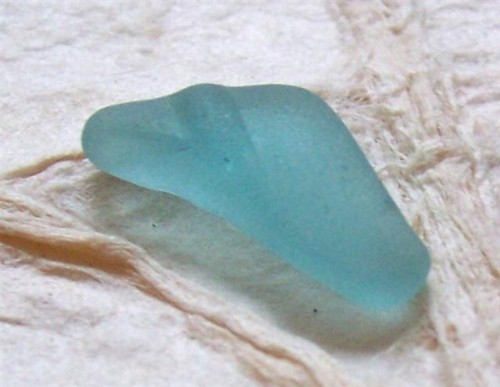
And perhaps I'll find a piece of sea glass, once broken and plain, now beautiful and weathered, its jagged, sharp edges smoothed fine by the pounding waves.
Tuesday, February 2, 2016
Just a Damn Cat
I woke up at 7:05 this morning. I had no alarm, but I knew that I wouldn't oversleep. I watched the clock on my phone tick, minute by minute, until 7:22. That would make it one year. One year since I said my final goodbye to my Ransom cat.

I spent the next few minutes looking at pictures on my phone. Things like Facebook and Timehop are wonderful for good memories but extra-painful for others. Having said goodbye to my dad only 48 hours earlier, it felt stupid to cry about a cat. I scrunched up my face and reminded myself of the suffering happening all around me: wives losing husbands, children losing fathers, financial disaster.
I have a bad habit of comparative grieving. Looking at the grief of others and trying to minimize my own in comparison. "I had my dad for 39 years," I'll think. "We knew it was coming," I'll remind myself. And then I put my own sadness on some sliding scale of grief where my own feels like it should be less than others. And then I feel guilty when I can't make it stay there.
So this is how I started my morning -- the last morning with my mom -- by sobbing quietly into my pillow and telling myself, "It's just a damn cat."

Maybe they were the tears I'd been holding back for my dad, coming out sideways. Maybe they were tears for so many friends I cannot help right now. Maybe they were about missing dinner with my little buddy, Elliott, turning 7 today. Maybe they were just the by-product of exhaustion and too much quiet.
Or maybe they were tears over a goddamned cat. The orneriest, most badass kitty cat I've ever known. No water glass was ever safe from her. No alarm clock ever more reliable. No animal ever to be tolerated. No flip flop ever unchewed. She was grumpy and beautiful and quirky and destructive, but she was mine.
There's something to be said for the first animal you ever own on your own. Or if it's a cat, the first cat to ever own you. She was with me for 15 years. I've never known a home here in Fort Worth without her. I had never started a school year without her waking me up, knocking things off the nightstand or chewing on my ponytail. And I haven't gone a day this whole year without looking for her when I walk in the door.
It's easy to say she was just a damn cat, but in truth, she was so much more. She was my damn cat.
Or, rather, I was her damn person.
Saturday, January 30, 2016
Like a Freight Train
Dean Nazworth was one-of-a-kind. I know people say that about others all the time as a way of trying to provide a blanket statement of their specialness. I've always believed this about him, but only as I grew up and meet so many people of this world have I come to understand how true a statement it really is about him.
Born dirt poor and living, literally, on dirt floors at times, the childhood of my father remains largely unknown to me. It was a time he just didn't talk much about. When he did, the themes of his youngest years were work, catching fish, and more work -- themes that would last a lifetime really.
Our grandfather often would tell me a story about my dad as a child, however, that revealed so much of the man I know now. Each afternoon, Dean would walk home, carrying his books and lunch pail. As he walked, his dad would watch him stop every so often, reach into the pail, and pull out a piece of sandwich or bread and feed it to one of the dogs or stray animals he'd encounter along the way. Soon, animals along his path began to know the time Dean would wander home and make themselves available to walk behind and pick up his scraps. Anyone who has ever sat down to a meal with my dad understands what a sacrifice sharing those meals had to be.
When he met my mother, she was a waitress in a small truck stop diner in Hereford, Texas. He'd come in each day, buy a $0.25 cup of coffee, and leave her a $5.00 tip. I don't know that he ever really spoke to her much at first, but one night in a club, he told one of his friends, "I'm going to marry her. I like the way she shoots pool." And much like everything else he would take on in life, he figured out a way. My mother says that she married my dad because he was fun, and I don't doubt that for a second. Wherever Dean Nazworth has ever gone, he had a Hell of a good time.
Each of them had been married before and brought a son to their new marriage. Later, they would add me to the mix. My mom always said they had a "yours, mine, and ours" situation although I always tease it was more like "Good try. Good try. Nailed it." We moved from Hereford to Pampa where Dean and Wanda managed a private country-western nightclub and bar for a few years. Their time there provided them with good friends, good stories, and a dance floor all to themselves each afternoon. If there was a defining image of my childhood, it would be of me roller-skating around that floor as my parents danced.
In 1982, Dean and Wanda moved here, to Howardwick, where he remained for the next 30 years -- seemingly unfathomable for a man who was always on the move. Yet his children had a school that loved and supported them, and in my mind, that was the reason he put down roots. That and a home within 5 minutes of a lake full of all the catfish and crappie one could ever catch. We spent what seems to be most of my formative life on a boat, poles in the water, waiting for a bite. My mom and dad also eventually found their community at the Clarendon Country Club, taking up golf and finding others whose two biggest goals were to compete and have fun. As we thought about where exactly we should celebrate the life of my dad, it only seemed natural to gather there, at the club, overlooking both the lake and golf course he so loved.
My father was a natural charmer, always making friends wherever he went: restaurants, ball games, grocery stores, it didn't matter. He always greeted you with a "Hey, buddy!" and a big grin. He had a handshake that could crush walnuts, but those same hands could tame a wild cat or softly brush away a tear. He loved pearl snap shirts and baseball caps, Little Debbie snack cakes, fried fish, and a challenge. He shot dice, drove fast, and loved deeply. He smelled like Old Spice, Lava soap, and freshly cut grass. There wasn't anything he couldn't seem to fix, somehow, or a game he couldn't beat you at. He'd spot you 100 points at dominoes and still beat you by 20. He could shoot pool with either hand and once outshot his own son and grandson with the end of a broomstick instead of a pool cue.
Dean shared his life with his wife and best friend of 43 years. She was his Freight Train. He said that whenever she rounded the bases on the softball field or broke up a fight at the bar or even just got mad at him, that's how she came at you. And the name stuck. I prefer to think that it was born the moment he first saw her because that's how his love for her hit him -- like a freight train.
Dean loved his kids. He taught us to work hard, complain little, and never be on time. He was blessed first by his son, James Dean (or JD). In him, I see my dad's kind heart, his love for animals, and his ability and drive to fix things. He has my father's hands: strong but gentle. In his son, Jimmy Ray, I find his determination and stubbornness and love for going fast. My dad loved watching his son study a problem first, watching his mind work through all the solutions before solving it whereas my dad could only plow in headfirst and try a hundred different things first. With me, he found his storyteller and the audience who couldn't help but laugh at all of his jokes. I have his eyes and his love of sports and competition, and his sensitive nature. Each of the boys inherited my dad's good sense to find a strong woman and marry her. Their marriages of 28 years and 19 years are proof of that. The boys brought two beautiful daughters-in-law, Tammy and Becky, and three incredibly cute grandsons, Hunter, Isaiah, and Jaxson, into his life.
Today is not a day for goodbyes; my dad was notoriously terrible at those. Today should be a day for good friends, good fun, and good stories. That's what he would've wanted. We'd love for you to leave here and do something Dean would love: tell a joke to a stranger, play a round of golf, shoot a little pool, or leave your waitress an extra big tip on a cup of coffee. And tell those that you love just how much you love them. Tell them loudly and tell them often. Let their love for you hit you like a freight train.
Born dirt poor and living, literally, on dirt floors at times, the childhood of my father remains largely unknown to me. It was a time he just didn't talk much about. When he did, the themes of his youngest years were work, catching fish, and more work -- themes that would last a lifetime really.
Our grandfather often would tell me a story about my dad as a child, however, that revealed so much of the man I know now. Each afternoon, Dean would walk home, carrying his books and lunch pail. As he walked, his dad would watch him stop every so often, reach into the pail, and pull out a piece of sandwich or bread and feed it to one of the dogs or stray animals he'd encounter along the way. Soon, animals along his path began to know the time Dean would wander home and make themselves available to walk behind and pick up his scraps. Anyone who has ever sat down to a meal with my dad understands what a sacrifice sharing those meals had to be.
When he met my mother, she was a waitress in a small truck stop diner in Hereford, Texas. He'd come in each day, buy a $0.25 cup of coffee, and leave her a $5.00 tip. I don't know that he ever really spoke to her much at first, but one night in a club, he told one of his friends, "I'm going to marry her. I like the way she shoots pool." And much like everything else he would take on in life, he figured out a way. My mother says that she married my dad because he was fun, and I don't doubt that for a second. Wherever Dean Nazworth has ever gone, he had a Hell of a good time.
Each of them had been married before and brought a son to their new marriage. Later, they would add me to the mix. My mom always said they had a "yours, mine, and ours" situation although I always tease it was more like "Good try. Good try. Nailed it." We moved from Hereford to Pampa where Dean and Wanda managed a private country-western nightclub and bar for a few years. Their time there provided them with good friends, good stories, and a dance floor all to themselves each afternoon. If there was a defining image of my childhood, it would be of me roller-skating around that floor as my parents danced.
In 1982, Dean and Wanda moved here, to Howardwick, where he remained for the next 30 years -- seemingly unfathomable for a man who was always on the move. Yet his children had a school that loved and supported them, and in my mind, that was the reason he put down roots. That and a home within 5 minutes of a lake full of all the catfish and crappie one could ever catch. We spent what seems to be most of my formative life on a boat, poles in the water, waiting for a bite. My mom and dad also eventually found their community at the Clarendon Country Club, taking up golf and finding others whose two biggest goals were to compete and have fun. As we thought about where exactly we should celebrate the life of my dad, it only seemed natural to gather there, at the club, overlooking both the lake and golf course he so loved.
My father was a natural charmer, always making friends wherever he went: restaurants, ball games, grocery stores, it didn't matter. He always greeted you with a "Hey, buddy!" and a big grin. He had a handshake that could crush walnuts, but those same hands could tame a wild cat or softly brush away a tear. He loved pearl snap shirts and baseball caps, Little Debbie snack cakes, fried fish, and a challenge. He shot dice, drove fast, and loved deeply. He smelled like Old Spice, Lava soap, and freshly cut grass. There wasn't anything he couldn't seem to fix, somehow, or a game he couldn't beat you at. He'd spot you 100 points at dominoes and still beat you by 20. He could shoot pool with either hand and once outshot his own son and grandson with the end of a broomstick instead of a pool cue.
Dean shared his life with his wife and best friend of 43 years. She was his Freight Train. He said that whenever she rounded the bases on the softball field or broke up a fight at the bar or even just got mad at him, that's how she came at you. And the name stuck. I prefer to think that it was born the moment he first saw her because that's how his love for her hit him -- like a freight train.
Dean loved his kids. He taught us to work hard, complain little, and never be on time. He was blessed first by his son, James Dean (or JD). In him, I see my dad's kind heart, his love for animals, and his ability and drive to fix things. He has my father's hands: strong but gentle. In his son, Jimmy Ray, I find his determination and stubbornness and love for going fast. My dad loved watching his son study a problem first, watching his mind work through all the solutions before solving it whereas my dad could only plow in headfirst and try a hundred different things first. With me, he found his storyteller and the audience who couldn't help but laugh at all of his jokes. I have his eyes and his love of sports and competition, and his sensitive nature. Each of the boys inherited my dad's good sense to find a strong woman and marry her. Their marriages of 28 years and 19 years are proof of that. The boys brought two beautiful daughters-in-law, Tammy and Becky, and three incredibly cute grandsons, Hunter, Isaiah, and Jaxson, into his life.
Today is not a day for goodbyes; my dad was notoriously terrible at those. Today should be a day for good friends, good fun, and good stories. That's what he would've wanted. We'd love for you to leave here and do something Dean would love: tell a joke to a stranger, play a round of golf, shoot a little pool, or leave your waitress an extra big tip on a cup of coffee. And tell those that you love just how much you love them. Tell them loudly and tell them often. Let their love for you hit you like a freight train.
Thursday, December 31, 2015
Light
There have been several times these last few weeks where I wanted to be anywhere or do anything else but what I've been doing. Many times, I thought it would be easier to lose myself at the bottom of a bottle or crawl into bed and hide under the covers forever. Or just stop. Give up and say that this is beyond my control. Or run away. I dream at night about waking up on a quiet beach or a mountain cabin or a foreign country.
They seem like easy choices on the surface. But if there's anything I've learned in life, it's that "easy" doesn't always equal "better".
Looking back, it's easy to say that I'm ending this year in pain. It's easy to look at myself and find all of the things I hate about myself -- all those things I wish I could change. I'm overly-sensitive and stubbornly proud and terrified of failing. Yes, those are things easy to see about me.
But "easy" doesn't always equal "accurate" either.
I am sensitive. I joke often that when God gave out feelings, I got in line for thirds. It's a part of myself that I've always been ashamed of. It's been scolded by bosses as unprofessional and taken advantage of by others. My sensitivity was a target, a soft spot, a trigger. All my life, I viewed my mother as the "tough" one. She was the one I was afraid to cry in front of and hid my hurt from. I wanted, more than anything, to shield myself as she could. What I've learned, however, in the last few years (and weeks especially) is that my sensitivity has led me. It guides me in the questions I ask, the battles I choose, the decisions I make. It gives me the understanding and patience to sit bedside and not look away. It reminds me how lucky I am to have had 39 years of my father's love -- so much more than far too many have had, and it gives me the ability to give him permission to leave us when he's ready. More than anything, it gives my mother an example to follow. This woman -- this wonderful and strong woman -- who held her feelings and fear at bay all of her life to shield her from pain is now defenseless. She is uncomfortable and unsure in her own feelings, but she is not alone in them. I am grateful to have grown up in a family who, while they may not have loved my sensitive nature, never forced me to abandon it.
I am stubbornly proud. To a fault, many times. I detest asking for help and resist accepting it when given. I believe fervently in making my own way, owing nothing to anyone, and standing on my own. That, to me, is a success. But it's not, really, because when I look at my life, who am I without those around me? From my family to colleagues to friends I see often and those I see rarely and even those I've never even officially met. My stubbornness leads to me being a better teacher and a better competitor, but it also makes me stick and stay. And my pride, well, it forces me to think of others before myself, and for that I'm grateful. I'm grateful to be in a place I can still want more for someone else than need for myself. I'm not alone, however, and even on the days that I do crawl into bed and hide away, I know that I will always have someone to seek me out, take my hand, and pull me back into the world -- whether I ask them to or not because I'm also surrounded by people just as stubborn as me.
It would be so easy to judge myself or this year by only the sadness I feel now, but that's not fair or accurate. This year, I was loved by many friends, traveled to wonderful cities, ate delicious food, drank, danced, and laughed a thousand times more than I cried. I saw my favorite team win a national championship, and I sat court side on their journey. I challenged myself, and I met the challenges of others. I grew. I changed. I reflected. I was knocked down. I kept getting back up.
Yes, things seem dark now. This will not be the last dark day I see, no matter my hopefulness for 2016. But without acknowledging the dark, I cannot see the value of my light.
And I am surrounded by so, so much light.
I wish you light and love and laughter this year, my friends.
They seem like easy choices on the surface. But if there's anything I've learned in life, it's that "easy" doesn't always equal "better".
Looking back, it's easy to say that I'm ending this year in pain. It's easy to look at myself and find all of the things I hate about myself -- all those things I wish I could change. I'm overly-sensitive and stubbornly proud and terrified of failing. Yes, those are things easy to see about me.
But "easy" doesn't always equal "accurate" either.
I am sensitive. I joke often that when God gave out feelings, I got in line for thirds. It's a part of myself that I've always been ashamed of. It's been scolded by bosses as unprofessional and taken advantage of by others. My sensitivity was a target, a soft spot, a trigger. All my life, I viewed my mother as the "tough" one. She was the one I was afraid to cry in front of and hid my hurt from. I wanted, more than anything, to shield myself as she could. What I've learned, however, in the last few years (and weeks especially) is that my sensitivity has led me. It guides me in the questions I ask, the battles I choose, the decisions I make. It gives me the understanding and patience to sit bedside and not look away. It reminds me how lucky I am to have had 39 years of my father's love -- so much more than far too many have had, and it gives me the ability to give him permission to leave us when he's ready. More than anything, it gives my mother an example to follow. This woman -- this wonderful and strong woman -- who held her feelings and fear at bay all of her life to shield her from pain is now defenseless. She is uncomfortable and unsure in her own feelings, but she is not alone in them. I am grateful to have grown up in a family who, while they may not have loved my sensitive nature, never forced me to abandon it.
I am stubbornly proud. To a fault, many times. I detest asking for help and resist accepting it when given. I believe fervently in making my own way, owing nothing to anyone, and standing on my own. That, to me, is a success. But it's not, really, because when I look at my life, who am I without those around me? From my family to colleagues to friends I see often and those I see rarely and even those I've never even officially met. My stubbornness leads to me being a better teacher and a better competitor, but it also makes me stick and stay. And my pride, well, it forces me to think of others before myself, and for that I'm grateful. I'm grateful to be in a place I can still want more for someone else than need for myself. I'm not alone, however, and even on the days that I do crawl into bed and hide away, I know that I will always have someone to seek me out, take my hand, and pull me back into the world -- whether I ask them to or not because I'm also surrounded by people just as stubborn as me.
It would be so easy to judge myself or this year by only the sadness I feel now, but that's not fair or accurate. This year, I was loved by many friends, traveled to wonderful cities, ate delicious food, drank, danced, and laughed a thousand times more than I cried. I saw my favorite team win a national championship, and I sat court side on their journey. I challenged myself, and I met the challenges of others. I grew. I changed. I reflected. I was knocked down. I kept getting back up.
Yes, things seem dark now. This will not be the last dark day I see, no matter my hopefulness for 2016. But without acknowledging the dark, I cannot see the value of my light.
And I am surrounded by so, so much light.
I wish you light and love and laughter this year, my friends.
Thursday, December 24, 2015
The Roller Coaster
The last two weeks have been an up-and-down, sideways-twisting, loop-the-loop, roller coaster of a ride. With any chronic disease, like Parkinson's, this is the way of life. It's been this way for many years, but this felt different. It feels different, I should say, because it is different. It has felt like the ride was coming to the end.
When I got home two weeks ago, we prepared for the very worst. Each time we thought we made a decision, something happened to make us question. To make us afraid we were wrong. It has been the most confusing, sad, gut-wrenching moments of my life, watching my father deteriorate and seeing my mom struggle. There is no handbook for these moments. There is no one who can make these decisions for you. Even if you've had that talk with your loved ones (and if you haven't, you should), it's so hard to know when the end is really the end? When is enough truly enough?
We live in a society where it's practically a sin to stop. We believe in fighting and hanging on and never giving up. And for 95% of the time, that's a pretty great attitude. There are times, however, that I've wondered who is hanging on for whom?
Each of us has separately said our own goodbyes to my dad. I have been for years with each decline. And in the last two weeks, we've let him know that it's okay to let go if he's tired. He hasn't though, and we've decided to let him fight as much as he wants. It feels selfish, in a way, to put that decision on him, but it also feels selfish to keep it for our own.
For most of this time, we make the 140 mile trip, we sit in his room for hours, and we wait for the few moments he's awake. My mom monitors his pain by his facial expression. She explains what the nurses are doing if they do not. She strokes his forehead and sings softly to help him sleep. My father was always the caretaker, the nurturer, when we were sick; now that task has fallen to her. And she's more beautiful at it than anything she's ever done, I think.
Two nights ago, my mother's best friend of nearly 50 years (my Aunt Patti) came to sit with us. As she and Mom told stories from when they were young and wild, I watched my father watch them. They told story after story for almost two hours. Some, I had heard (like my mother putting my dad out of the car on a wintry night on the Canyon E-Way and then forgetting where she left him); others I had not (like how my dad, before they officially met, would come into the diner where my mom waited tables and order a $0.25 cup of coffee and then leave her a $5 tip). They cackled and cut up, and the whole time, my dad grinned. I kept waiting for him to sit up and defend himself or tell a story of his own, but that's an empty wish. Instead, I was just grateful for the grin.
And today, he's been awake and lucid more than in the past two weeks combined, looking at my mom, smiling, answering her questions with a nod or a blink, and even telling her, "I love you". It was the only Christmas gift she needed or wanted.
I know that my dad isn't going to get out of that bed again. I know his wounds will never fully heal. The inevitable is the inevitable for a reason. The train will eventually return to the station because the ride cannot go on forever. But today, it's enough to just still be on the track.
Merry Christmas and love to you all.
When I got home two weeks ago, we prepared for the very worst. Each time we thought we made a decision, something happened to make us question. To make us afraid we were wrong. It has been the most confusing, sad, gut-wrenching moments of my life, watching my father deteriorate and seeing my mom struggle. There is no handbook for these moments. There is no one who can make these decisions for you. Even if you've had that talk with your loved ones (and if you haven't, you should), it's so hard to know when the end is really the end? When is enough truly enough?
We live in a society where it's practically a sin to stop. We believe in fighting and hanging on and never giving up. And for 95% of the time, that's a pretty great attitude. There are times, however, that I've wondered who is hanging on for whom?
Each of us has separately said our own goodbyes to my dad. I have been for years with each decline. And in the last two weeks, we've let him know that it's okay to let go if he's tired. He hasn't though, and we've decided to let him fight as much as he wants. It feels selfish, in a way, to put that decision on him, but it also feels selfish to keep it for our own.
For most of this time, we make the 140 mile trip, we sit in his room for hours, and we wait for the few moments he's awake. My mom monitors his pain by his facial expression. She explains what the nurses are doing if they do not. She strokes his forehead and sings softly to help him sleep. My father was always the caretaker, the nurturer, when we were sick; now that task has fallen to her. And she's more beautiful at it than anything she's ever done, I think.
Two nights ago, my mother's best friend of nearly 50 years (my Aunt Patti) came to sit with us. As she and Mom told stories from when they were young and wild, I watched my father watch them. They told story after story for almost two hours. Some, I had heard (like my mother putting my dad out of the car on a wintry night on the Canyon E-Way and then forgetting where she left him); others I had not (like how my dad, before they officially met, would come into the diner where my mom waited tables and order a $0.25 cup of coffee and then leave her a $5 tip). They cackled and cut up, and the whole time, my dad grinned. I kept waiting for him to sit up and defend himself or tell a story of his own, but that's an empty wish. Instead, I was just grateful for the grin.
And today, he's been awake and lucid more than in the past two weeks combined, looking at my mom, smiling, answering her questions with a nod or a blink, and even telling her, "I love you". It was the only Christmas gift she needed or wanted.
I know that my dad isn't going to get out of that bed again. I know his wounds will never fully heal. The inevitable is the inevitable for a reason. The train will eventually return to the station because the ride cannot go on forever. But today, it's enough to just still be on the track.
Merry Christmas and love to you all.
Friday, December 18, 2015
Thursdays
Thursdays are my mother's favorite days. Thursdays are shuffling cards, homemade desserts, and good friends. Thursdays are a break from worry, from heartache, from pain.
On first appearance, they look innocent enough. Christmas sweaters, Santa earrings, coin purses. If you happened by, you might think them a book club or a prayer group, full of grandmothers and aunties, just waiting to pinch your cheeks.
You'd be wrong though. These are not your average grandmothers. These are my mother's people, and anyone my mother spends time with could never be anything but fun and fierce. If you've got nickels and quarters in your pocket, you're nothing but fresh meat.
The game is Rummy Dummy. At first glance, it seems simple enough: a game devised on the sequence and systematic playing of specific, pre-determined hands. Looking deeper, however, it becomes a gauntlet of seemingly impossible card combinations meant to do nothing but strand its victim while it bleeds you of all your silver change.
It's not an expensive game. It's just a quarter to join and a dime for every round you don't lay your cards down, but with each coin you drop in the bucket, your desire to quit is only tempered by the insatiable need to hear the jingle of all those coins in your pocket.
Any time I'm in town on a non-holiday Thursday (which is not often), I'm invited to the card game. I like it because it makes me feel grown-up. Contrary to popular belief, "grown-up" is not an age-thing; it's an acceptance thing. But always -- always -- there are pre-game reminders from my mother.
"You'll need to pack a lunch."
"You have to pay attention."
"Don't be on your phone, texting at the table."
"When you cut cards, leave the bottom."
"Don't be late."
I learned that last truth pretty quickly yesterday as one of the regulars showed up, late from a doctor's appointment, midway through the first hand. The penalty for showing up late? A dime in the pot, 55 points on your scorecard, and a second go-round on hand #1. That dime buys you nothing apparently.
As a lifelong careful observer of rules and devout follower of protocol, Thursdays with the girls always give me sweaty palms for at least half an hour.
While we played, I tried to stick up for one of my favorite ladies when the others were complaining about a well-played quick hand that ruined all of their plans.
"Don't be nice to her just because she's the oldest! No special treatment!" They chorused and crowed, and even she admitted, "It was kind of an ugly play... But I don't care."
"I should have known better," I thought to myself as I watched this 90+ year old woman flip a card across the table with such fierce grace that it'd put all those baseball bat flips to shame.
Over the course of three games, they complained and wheedled and poked at one another, but they also caught up on one another's lives and grandkids and holiday plans. They even cut loose a foul word or two (which only made me love them more). During lunch, they listened to my mom's update on my dad. They let her talk, they helped her cry, and they comforted her with fudge and homemade cookies and empathy that only wives and mothers and daughters who had journeyed this road can give. At the end of the day, they wrapped us in big hugs and whispered support.
I am so grateful for these women. My mother has always been private with her pain, yet they don't allow her to hide. And with each moment she shares, I see the trust she has in them -- a feat not easily accomplished. But more than just listening and comfort, they cut us no slack. They took our quarters and dimes without hesitation because that's what you do on a Thursday. And my mother would have it no other way.
I did manage to win a game, and I will tell you that I've never worked harder or been more proud of a handful of dimes and quarters. I put them back in my mother's coin purse for another Thursday with the girls. And it was money well-spent.
(Just kidding. It was totally my mom's money to begin with. I'm not quite grown-up yet.)
On first appearance, they look innocent enough. Christmas sweaters, Santa earrings, coin purses. If you happened by, you might think them a book club or a prayer group, full of grandmothers and aunties, just waiting to pinch your cheeks.
You'd be wrong though. These are not your average grandmothers. These are my mother's people, and anyone my mother spends time with could never be anything but fun and fierce. If you've got nickels and quarters in your pocket, you're nothing but fresh meat.
The game is Rummy Dummy. At first glance, it seems simple enough: a game devised on the sequence and systematic playing of specific, pre-determined hands. Looking deeper, however, it becomes a gauntlet of seemingly impossible card combinations meant to do nothing but strand its victim while it bleeds you of all your silver change.
It's not an expensive game. It's just a quarter to join and a dime for every round you don't lay your cards down, but with each coin you drop in the bucket, your desire to quit is only tempered by the insatiable need to hear the jingle of all those coins in your pocket.
Any time I'm in town on a non-holiday Thursday (which is not often), I'm invited to the card game. I like it because it makes me feel grown-up. Contrary to popular belief, "grown-up" is not an age-thing; it's an acceptance thing. But always -- always -- there are pre-game reminders from my mother.
"You'll need to pack a lunch."
"You have to pay attention."
"Don't be on your phone, texting at the table."
"When you cut cards, leave the bottom."
"Don't be late."
I learned that last truth pretty quickly yesterday as one of the regulars showed up, late from a doctor's appointment, midway through the first hand. The penalty for showing up late? A dime in the pot, 55 points on your scorecard, and a second go-round on hand #1. That dime buys you nothing apparently.
As a lifelong careful observer of rules and devout follower of protocol, Thursdays with the girls always give me sweaty palms for at least half an hour.
While we played, I tried to stick up for one of my favorite ladies when the others were complaining about a well-played quick hand that ruined all of their plans.
"Don't be nice to her just because she's the oldest! No special treatment!" They chorused and crowed, and even she admitted, "It was kind of an ugly play... But I don't care."
"I should have known better," I thought to myself as I watched this 90+ year old woman flip a card across the table with such fierce grace that it'd put all those baseball bat flips to shame.
Over the course of three games, they complained and wheedled and poked at one another, but they also caught up on one another's lives and grandkids and holiday plans. They even cut loose a foul word or two (which only made me love them more). During lunch, they listened to my mom's update on my dad. They let her talk, they helped her cry, and they comforted her with fudge and homemade cookies and empathy that only wives and mothers and daughters who had journeyed this road can give. At the end of the day, they wrapped us in big hugs and whispered support.
I am so grateful for these women. My mother has always been private with her pain, yet they don't allow her to hide. And with each moment she shares, I see the trust she has in them -- a feat not easily accomplished. But more than just listening and comfort, they cut us no slack. They took our quarters and dimes without hesitation because that's what you do on a Thursday. And my mother would have it no other way.
I did manage to win a game, and I will tell you that I've never worked harder or been more proud of a handful of dimes and quarters. I put them back in my mother's coin purse for another Thursday with the girls. And it was money well-spent.
(Just kidding. It was totally my mom's money to begin with. I'm not quite grown-up yet.)
Subscribe to:
Posts (Atom)